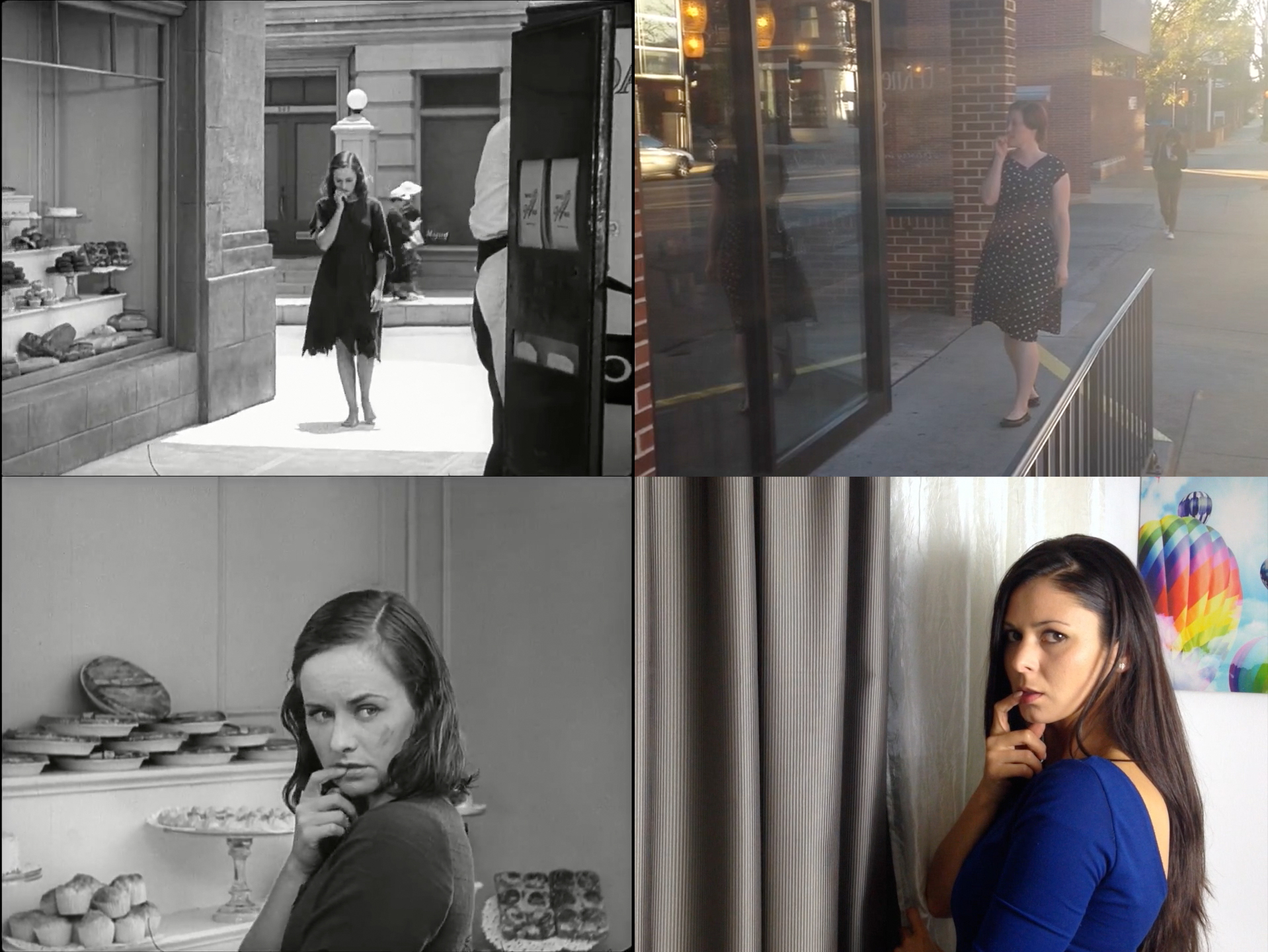
Workflow was a project by Art + Technology Lab grant recipient Michael Mandiberg. The artist used self-tracking technology to understand the changing definition of labor in the digital age. The endeavor had multiple components, including a one-year sonic installation, Quantified Self Portrait (Rhythms), in LACMA’s Pritzker Parking Garage elevators, and a three-channel video, Quantified Self Portrait (One Year Performance), which ran at LACMA’s Ray’s & Stark Bar from February 16, 2017 to August 8, 2017. Postmodern Times, the artist’s remake of Charlie Chaplin’s film Modern Times, debuted in LACMA’s Brown Auditorium on December 19, 2017.
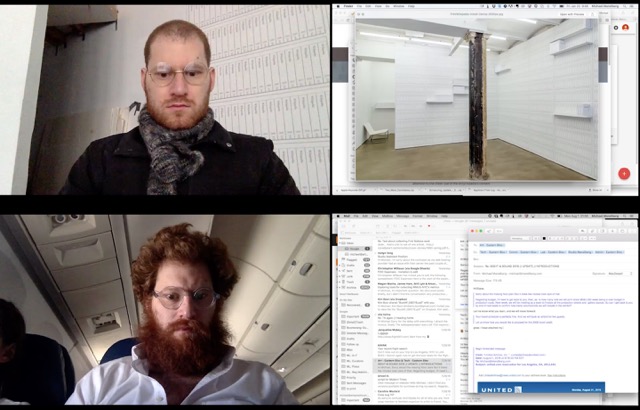
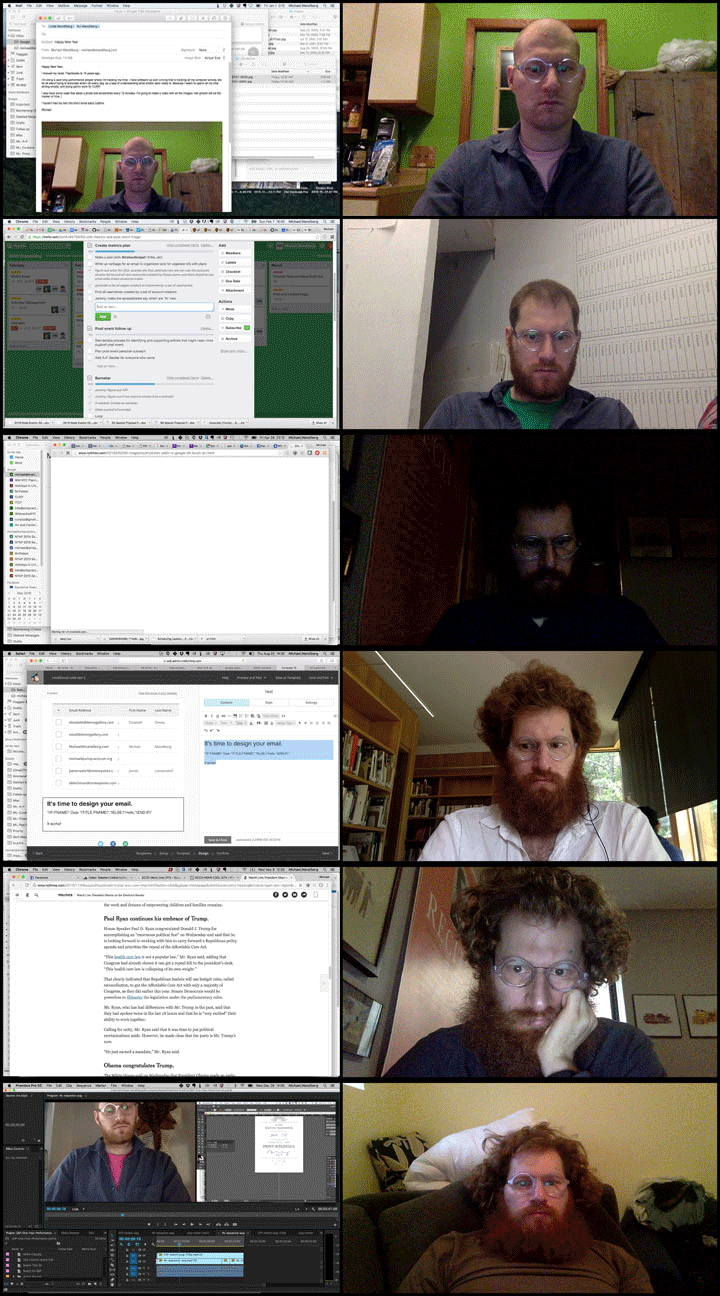
Quantified Self Portrait (One Year Performance) is a frenetic stop motion animation composed of webcam photos and screenshots that software captured from the artist’s computer and smartphone every 15 minutes for an entire year; this is a technique for surveilling remote computer labor. The images are paired with the short distillations of what Mandiberg learned each day during the durational performance.
Quantified Self Portrait (Rhythms) sonifies a year of the artist’s heart rate data alongside the sound of email alerts. Mandiberg uses himself as a proxy to hold a mirror to a pathologically overworked and increasingly quantified society, revealing a personal political economy of data. The piece plays for one full year, from January 1, 2017 to January 1, 2018, with each moment representing the data of the exact date and time from the previous year.
Artist Statement
As part of the Art + Technology Lab program, I was asked to write progress reports each time I requested a disbursement of funds from my grant account. I think this is probably a way of ensuring accountability, and keeping grantees on track. Looking back, I used it almost as a form of journaling. These reports were a place to articulate my decisions, and chart out my next challenges. This was particularly important for this project because I was working towards installing it at LACMA and thus had so much to communicate to Joel Ferree, who became a key advisor and collaborator, without whom I could not have achieved the project’s goals.
When I was asked to write about my experience working with the Art + Technology Lab, I turned to these journals/reports, and found so much detail. The reports began with a summary of the very first visit I made to LACMA:
In June I visited Los Angeles to meet with the other grantees, museum staff and advisers. During my informal presentation I shared the key development that happened between the date of my application and my acceptance: one project had become two projects. I applied with a project about digital labor; I proposed to remake Charlie Chaplin’s film “Modern Times” by parceling it out shot-by-shot to digital laborers on online gig-economy marketplaces. During the period between my application and my acceptance, I developed a second interrelated project about digital labor; I had begun tracking all of my own labor, in an effort to understand the material and philosophical ramifications of what I do.
It was a testament to the program that the Art + Technology Lab welcomed this development, understood the way the projects were two sides of the same coin, and supported both projects as I worked on them in tandem.
The reports are full of so many technical details! These included roadblocks like when my progress with the Chaplin film was thwarted by an overeager moderator (or moderation filter?) on the digital labor platform I had been using, guidance I received from the LACMA program’s technical advisors about choosing programming languages, or problem solving the nuances of power supplies and their relationship to speaker placement. For example, here is the description of the heartbeat recording process documented in the image of me on the bicycle:
Using a digital stethoscope, I recorded my heartbeat for Quantified Self Portrait (Rhythms). My team and I spent the day recording my heartbeat on a bicycle set up on a stationary trainer, doing ~10 exercise cycles peaking my heart rate at 150, then letting it fall. A raw recording of the heartbeat can be found at http://bit.ly/2jHdct6.
The stethoscope we used has two EQ modes, bass and midrange. Midrange is still primarily bass, but higher up; apparently there are medical reasons for this. We recorded a full set of audio in both modes, with the thought that at a later date an audio expert could make an informed decision based off the speakers, space, mounting, etc.
My final report ends with a reflection on my overall experience in the program. I wrote:
Working with LACMA on Workflow has been amazing. Art + Technology Lab staff (OMG Joel Ferree!!!) and LACMA curators have been thoughtful, dedicated, and flexible about all elements of this process. They have worked across departments (media, facilities, curatorial, registrar, design, and probably others I didn’t even hear about) to make a complicated project happen very, very quickly against significant technical odds. And throughout all of this, they remained laser focused on realizing the best version of the work possible, knowing when to follow my lead, and when to suggest productive adaptations. Everyone has been deeply competent, and deeply reasonable. I’ve never had such a good experience before.